Muscle Man
A Subjective View of an Objective Me
“Who am I?”, I wondered while looking at a picture of myself in Truro, Massachusetts on Cape Cod, a photograph taken when I was about 5 years old. There I was, standing on a sandy inlet of the bay where the tidal water recedes leaving rivulets and puddles, lingering evidence of the moon’s action and force, standing in a muscle man position, arms raised displaying my ‘baby’ biceps, expanded chest, sharing the shadows of day into night, posing like a child Adonis. On my face was a sternness, a Schwarzenegger-like expression that forced me to stare at the photo and wonder, “What was I thinking?” and, maybe the better question is, “Who was I?” What happened in the instant before the click of the shutter? Was I happy and laughing afterwards or bored and wanting to go home and eat? No one knows myself better than I do (except my parents, maybe?) but even I can’t get a real sense of that moment? That is the problem I have with photography.
In his book Camera Lucida, ‘Reflections on Photography’, Roland Barthes states that “What the photograph reproduces to infinity has occurred only once: the photograph mechanically repeats what could never be repeated existentially”. From this I take him to mean that a photograph is a particularization of time, an objective record, a literal non-interpretive imprint. It is finite and does not infer movement, does not tell a subjective story, it is what it is, with nothing added. I think this is the flaw of photography and why I do not see photography as an art form. In the absence of a continuum, as in the hand applying paint to a canvas or a movie with a succession of limited images strung together, photography becomes the product of the instrument and not the expression of the artist. How often have we heard that the photographer ‘chanced’ to get that shot? Yes, the taker of photo frames the shot, uses light, decides on some basic theme applying the best skills of his learned craft, but the shot itself is an accident, a flicker of the shutter, a chance encounter with light, depth of field, mass and time.
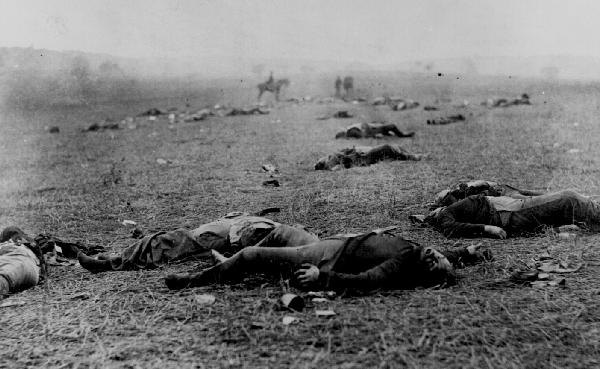
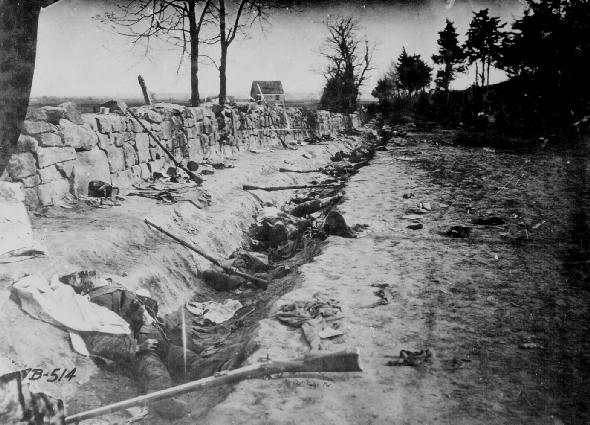
Certainly there are nice pictures, pretty pictures, even meaningful pictures. There are pictures that show the beauty of nature and the horror of war, the emotion of giving and horrendous deprivation, but at the end of the day it is a freezing, a stifling of reality which can only exist over time. So where the subjective experience comes in is not in the creation but in the viewing where we confuse the ‘quality’ of the photo with the depth of the personal reaction. At the end of the day, a painter’s stroke, a singer’s song, a dancer’s steps have precedents, moments in succession, and the future all in a split second…the instant containing what took place, what is and what will be by suggestion and line. We infer time because it is contained within the form, but in photography we can only inject our own presumption of what that frozen moment could have meant or its design for the future. There is nothing about a photo that reveals anything about the artist other than his guile. Thus, the operator and the spectator have no relationship. It is left to the spectator to self reveal as a viewer of the spectacle. We relate to the photo and the emotions it evokes, but not to the taker of the shot.
So I viewed this photo of me knowing that my father chose, in response to chemical interactions, neurology, the influence of light, his psyche and other influencers, that exact moment to click. And, there I was in this really nice photograph with contrasting shading and lighting setting me apart while embedding me in the solid beauty of this natural surrounding wondering how or what this has to do with me. Barthes speaks of the ‘studium’ or kinds of general take or impression “without special acuity” that derives from participating in the figures, faces, gestures and settings of the photograph. On that level, I enjoyed my enjoyment of the moment, trying to stay objective. But I could not remain aloof. As Barthes suggests, some photos pierce the indifference of the “average affect” and “punctuate” or disturb the ‘studium’ to become more poignant or significant to the viewer. This he calls ‘punctum’, the sting or prick of the photo leading to reflection.
I could not avoid thinking of my youthful struggles and hardships. I could not resist being drawn in to questioning what I have gained or lost over time. I thought of the child that remains within telling me unconscious stories about me that limit my present choice making or give me hope of finding my authenticity. I am prideful where I have succeeded in overcoming personal challenges, not letting myself get stuck by my history. In this instance, the photograph is less art than impulse, stirring personal emotions rather than informing my story. The story changes according to the viewer without regard for the originator of the image.
Barthes comes close to this notion when he says that, “I must submit to this law: I cannot penetrate, cannot reach into the photograph….”The photograph is flat, platitudinous in the true sense of the word…”It is a mistake to associate Photography, by reason of its technical origins, with the notion of dark passage (camera obscura)”. But his conclusion does not ring true for it is this lack of penetration that he says is its source of Power, where I would say it is the reason it fails. It is transfixed in time and can ultimately represent anything we want it to rather than suggest its own existential reality and by inference, its place in the continuum of time. On the other hand, photography is able to authenticate reality, make undisputable events that are otherwise falsely represented. Barthes states that photography does not lie as to the existence of existence – “Every photograph is a certificate of presence”. And this is crucial to history. But photography’s strength is its limitation. It replicates reality but describes nothing; it testifies to truth of occurrence but fails to transcend its journalistic prowess. This certainty of existence is fundamental to freedom, and human inquiry has to do with the nature of being and our place in the universe. Our investigation has less to do with literal verification of our physical presence and everything to do with our philosophical, spiritual, universal and cosmic purpose. To that end photography is indifferent, or at least impartial.
In his book Camera Lucida, ‘Reflections on Photography’, Roland Barthes states that “What the photograph reproduces to infinity has occurred only once: the photograph mechanically repeats what could never be repeated existentially”. From this I take him to mean that a photograph is a particularization of time, an objective record, a literal non-interpretive imprint. It is finite and does not infer movement, does not tell a subjective story, it is what it is, with nothing added. I think this is the flaw of photography and why I do not see photography as an art form. In the absence of a continuum, as in the hand applying paint to a canvas or a movie with a succession of limited images strung together, photography becomes the product of the instrument and not the expression of the artist. How often have we heard that the photographer ‘chanced’ to get that shot? Yes, the taker of photo frames the shot, uses light, decides on some basic theme applying the best skills of his learned craft, but the shot itself is an accident, a flicker of the shutter, a chance encounter with light, depth of field, mass and time.
Certainly there are nice pictures, pretty pictures, even meaningful pictures. There are pictures that show the beauty of nature and the horror of war, the emotion of giving and horrendous deprivation, but at the end of the day it is a freezing, a stifling of reality which can only exist over time. So where the subjective experience comes in is not in the creation but in the viewing where we confuse the ‘quality’ of the photo with the depth of the personal reaction. At the end of the day, a painter’s stroke, a singer’s song, a dancer’s steps have precedents, moments in succession, and the future all in a split second…the instant containing what took place, what is and what will be by suggestion and line. We infer time because it is contained within the form, but in photography we can only inject our own presumption of what that frozen moment could have meant or its design for the future. There is nothing about a photo that reveals anything about the artist other than his guile. Thus, the operator and the spectator have no relationship. It is left to the spectator to self reveal as a viewer of the spectacle. We relate to the photo and the emotions it evokes, but not to the taker of the shot.
So I viewed this photo of me knowing that my father chose, in response to chemical interactions, neurology, the influence of light, his psyche and other influencers, that exact moment to click. And, there I was in this really nice photograph with contrasting shading and lighting setting me apart while embedding me in the solid beauty of this natural surrounding wondering how or what this has to do with me. Barthes speaks of the ‘studium’ or kinds of general take or impression “without special acuity” that derives from participating in the figures, faces, gestures and settings of the photograph. On that level, I enjoyed my enjoyment of the moment, trying to stay objective. But I could not remain aloof. As Barthes suggests, some photos pierce the indifference of the “average affect” and “punctuate” or disturb the ‘studium’ to become more poignant or significant to the viewer. This he calls ‘punctum’, the sting or prick of the photo leading to reflection.
I could not avoid thinking of my youthful struggles and hardships. I could not resist being drawn in to questioning what I have gained or lost over time. I thought of the child that remains within telling me unconscious stories about me that limit my present choice making or give me hope of finding my authenticity. I am prideful where I have succeeded in overcoming personal challenges, not letting myself get stuck by my history. In this instance, the photograph is less art than impulse, stirring personal emotions rather than informing my story. The story changes according to the viewer without regard for the originator of the image.
Barthes comes close to this notion when he says that, “I must submit to this law: I cannot penetrate, cannot reach into the photograph….”The photograph is flat, platitudinous in the true sense of the word…”It is a mistake to associate Photography, by reason of its technical origins, with the notion of dark passage (camera obscura)”. But his conclusion does not ring true for it is this lack of penetration that he says is its source of Power, where I would say it is the reason it fails. It is transfixed in time and can ultimately represent anything we want it to rather than suggest its own existential reality and by inference, its place in the continuum of time. On the other hand, photography is able to authenticate reality, make undisputable events that are otherwise falsely represented. Barthes states that photography does not lie as to the existence of existence – “Every photograph is a certificate of presence”. And this is crucial to history. But photography’s strength is its limitation. It replicates reality but describes nothing; it testifies to truth of occurrence but fails to transcend its journalistic prowess. This certainty of existence is fundamental to freedom, and human inquiry has to do with the nature of being and our place in the universe. Our investigation has less to do with literal verification of our physical presence and everything to do with our philosophical, spiritual, universal and cosmic purpose. To that end photography is indifferent, or at least impartial.
So, there I stood in the fast fading sun on this beautiful sandy knoll, as rippling in my mind as the sand bars I stood upon, with a determined look to be the next Mr. America. It is not that I did not enjoy looking at and taking some measure of me in the photograph, but my story is so much richer, more complex and fulfilling than the photograph can suggest. And the story is still unfolding.